How to Build Emotional Intelligence: 7 Skills That Actually Move the Needle
Some people seem to navigate hard conversations, conflict, and their own bad days without everything falling apart. It’s rarely that they feel less — often they feel just as much as everyone else. The difference is that they’ve built a set of skills for recognizing, understanding, and working with emotion instead of being run by it.
That’s emotional intelligence (EI or EQ), and despite how it’s sometimes talked about, it isn’t a fixed trait you either have or don’t. It’s a learnable set of skills — which means the gap between where you are now and where you want to be is practice, not personality.
Research shows emotional intelligence is one of the strongest predictors of success across life domains. It accounts for roughly 58% of job performance outcomes and is a better predictor of leadership effectiveness than IQ alone. People with high emotional intelligence tend to earn more, build stronger relationships, experience less chronic stress, and recover faster from setbacks.
The demand for these skills continues to grow — emotional skills are projected to increase in importance by 26% by 2030 as workplaces become more complex and AI handles more technical tasks.
The good news? Unlike IQ, which is relatively stable, emotional intelligence can be developed at any age through consistent, intentional practice.
What Emotional Intelligence Actually Includes
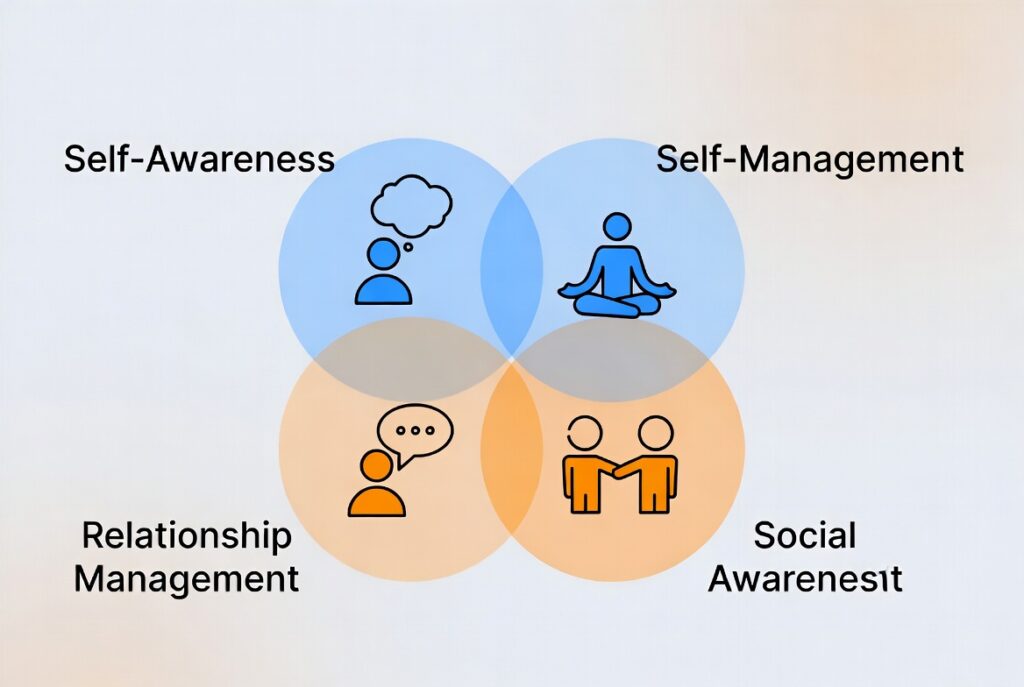
Emotional intelligence generally breaks down into four interconnected domains popularized by psychologist Daniel Goleman: self-awareness, self-management, social awareness, and relationship management. These domains encompass the ability to recognize your own emotions as they happen, manage your responses to them, accurately read emotions in others, and use that understanding to navigate relationships effectively.
None of these require suppressing feelings — the goal isn’t to feel less, it’s to respond more skillfully. The seven practical skills below map directly onto Goleman’s framework and give you concrete ways to strengthen each domain in daily life.
1.How to Build Emotional Intelligence: Build the Habit of Naming What You Feel
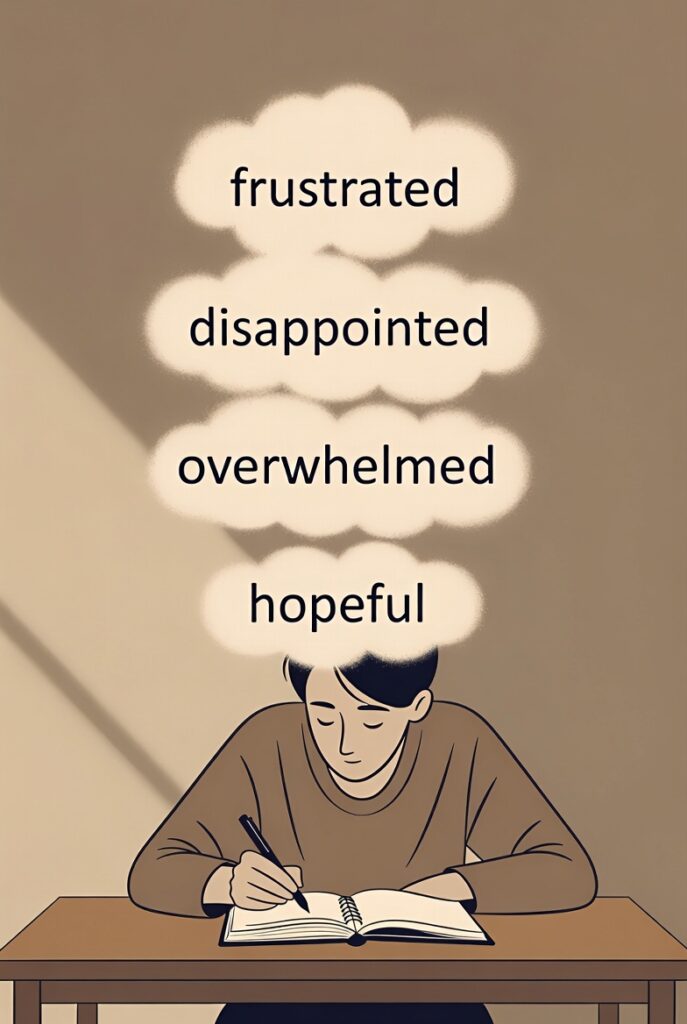
Most people’s emotional vocabulary is limited to a handful of broad labels — “fine,” “stressed,” “annoyed,” or “good.” Building precision here matters more than it seems. “Frustrated” and “disappointed” call for different responses, even though both might get labeled “annoyed” in the moment. Naming emotions activates the prefrontal cortex, which helps regulate the emotional centers of the brain and reduces the intensity of the feeling itself.
How to practice it:
Use an emotion wheel (search for “Plutchik’s wheel of emotions” or a simple feelings list). At set times during the day — morning coffee, after meetings, before bed — pause and ask: “What exactly am I feeling right now? Is it anger, or is it hurt underneath? Is this anxiety or excitement?” Journal for two minutes using specific words.
Real-life example: Instead of snapping “I’m so stressed!” at your partner after a long day, you might recognize: “I’m feeling overwhelmed by the backlog at work and a bit disappointed that my promotion timeline slipped.” This clarity lets you ask for support instead of venting.
Over time, richer emotional vocabulary improves decision-making, reduces rumination, and makes you far more effective at communicating needs. Start small — aim for three specific emotion labels per day.
2. How to Build Emotional Intelligence: Create a Gap Between Feeling and Reacting
Emotional intelligence isn’t about never feeling anger, hurt, or frustration — it’s about not letting the first, rawest version of that feeling drive your next move. Neuroscience shows there’s often a brief window between the emotional trigger and your behavioral response. Widening that window is one of the highest-leverage skills you can develop.
Practical techniques:
- Take three slow breaths (inhale for four counts, exhale for six).
- Use the “pause and label” method: silently name the emotion before replying to a triggering email or text.
- Implement the 10-second rule in conversations: wait ten seconds before responding when you feel activated.
Scenario: Your boss criticizes your project in front of the team. The immediate urge might be to defend yourself or shut down. Instead, you pause, notice the flush of embarrassment and defensiveness, take a breath, and respond: “Thanks for the feedback. I’d like to understand the main concerns so I can address them.” This skill protects relationships and your reputation while giving you access to better options.
3. How to Build Emotional Intelligence: Get Curious About Your Triggers
Certain situations reliably knock you off balance: being interrupted, feeling criticized, being left out of decisions, or hearing a specific tone of voice. These patterns usually trace back to past experiences, insecurities, or unmet needs. You don’t need to fully resolve the root cause to benefit — simply knowing “this is a trigger for me” changes how you respond in the moment.
How to build awareness:
Keep a trigger log for one week. Note the situation, what you felt, and what you did. Look for patterns. Then ask: “What need or value feels threatened here?” (e.g., respect, autonomy, fairness).
Example: You notice you overreact when teammates change plans last minute. Curiosity reveals it stems from a past job where last-minute changes led to missed deadlines and blame. Now, instead of lashing out, you can say, “Last-minute changes are tough for me because I like to plan carefully — can we discuss how to handle this?”
Curiosity transforms triggers from landmines into information.
4. How to Build Emotional Intelligence: Practice Listening to Understand, Not to Respond
A huge amount of miscommunication comes from listening just long enough to formulate a reply. Reading someone’s emotional state accurately — a core piece of emotional intelligence — requires giving them your full attention, including the parts they’re not saying directly (tone, body language, what’s left unsaid).
Active listening techniques:
- Put away devices.
- Use reflective statements: “It sounds like you’re feeling frustrated because…”
- Ask open questions: “What’s most important to you about this?”
- Notice nonverbal cues without assuming.
Work example: During a tense team meeting, instead of preparing your counterargument while a colleague speaks, you focus fully. You notice their shoulders are tense and voice is strained. Later you check in privately: “You seemed really passionate about that point — everything okay?”
This skill builds trust faster than almost anything else.
5. How to Build Emotional Intelligence: Separate the Person From the Behavior
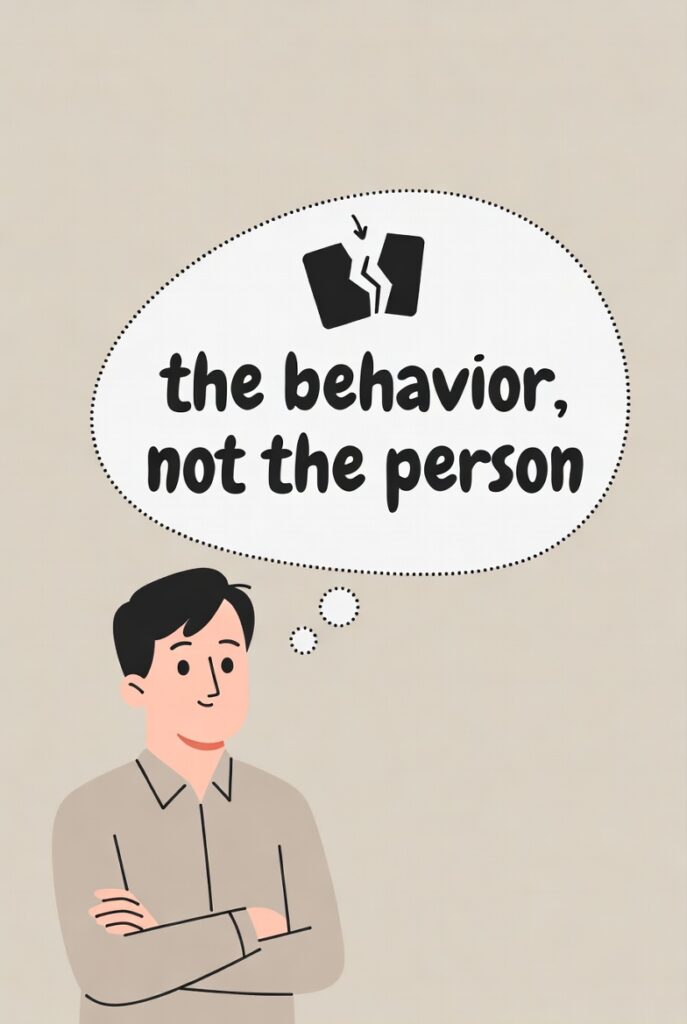
High emotional intelligence often shows up as the ability to be frustrated with what someone did without deciding they’re a bad person for doing it. This distinction keeps conflict from escalating into character attacks and makes resolution possible.
How to apply it:
When upset, complete this sentence internally or aloud: “I’m frustrated with [specific behavior] because [impact], and I still value [positive quality about the person].”
Relationship example: Your partner forgets an important date. Instead of “You never care about me,” try: “I felt hurt when the anniversary slipped your mind. I know you’ve been overwhelmed at work, and I appreciate how hard you work for us. Can we talk about how to make sure these things don’t get missed?”
This approach preserves dignity on both sides.
6. How to Build Emotional Intelligence: Take Ownership of Your Reactions
“You made me so angry” and “I felt really angry when that happened” describe the same event, but only one puts you in a position to do anything about it. Owning your emotional reactions — without excusing someone else’s behavior — is what makes productive communication possible.
Practice the shift:
Replace “You always…” with “I felt… when…” or “I noticed I became defensive when…”. This is especially powerful in feedback conversations and conflict.
Leadership example: Instead of telling a direct report “You’re always late and it’s disrespectful,” say: “When meetings start late, I feel concerned about our team’s momentum and I get frustrated. What’s getting in the way of being on time, and how can I support you?”
Ownership models maturity and invites collaboration rather than defensiveness.
7. How to Build Emotional Intelligence: Repair, Don’t Just Avoid Conflict
Emotional intelligence isn’t about never having friction — it’s about being able to come back from it. Relationships that last are built on successful repairs, not the absence of conflict.
Effective repair formula:
A short, specific, timely repair works best:
- Acknowledge what you did.
- Take responsibility without over-explaining or excusing.
- Express impact or regret.
- Offer to do better or ask what they need.
Simple script: “I was short with you earlier. That wasn’t about you — I was carrying stress from my day. I’m sorry. How can I make it right?”
Even imperfect repairs strengthen bonds when done consistently. Research on relationships shows that the ability to repair after conflict is one of the strongest predictors of long-term satisfaction.
The Bottom Line
Emotional intelligence isn’t about becoming unbothered or endlessly calm — it’s about building a wider gap between what you feel and what you do about it, and getting better at reading that same gap in other people. It’s the difference between reacting and responding, between misunderstanding and connection, between repeated conflict and genuine resolution.
Like any skill, it develops through repetition, not insight alone. The goal is to practice these moves in real conversations, not just recognize them in theory. Start with one skill this week. Notice what changes in your interactions and how you feel about yourself afterward.
If emotional reactivity often escalates into rumination afterward, these strategies for quieting an overthinking mind pair well with the skills here. And if part of your emotional load comes from struggling to say no or hold limits, see our guide on setting boundaries without guilt.
FAQ
Can emotional intelligence really be learned, or is it innate? It can be learned. While some people start with more natural self-awareness, the core skills — emotional vocabulary, self-regulation, empathetic listening — are trainable through consistent practice.
How is emotional intelligence different from just being nice? Being agreeable can actually reflect low emotional intelligence if it means avoiding honest feedback or suppressing your own needs. Emotional intelligence includes the ability to be direct and set limits, not just to be pleasant.
Does emotional intelligence matter more in relationships or at work? Both — it affects how well you navigate conflict, give and receive feedback, build trust, and read the room, which are all relevant whether the “room” is a team meeting or a family dinner.
If you’re thinking about starting your own blog or website — whether for journaling, sharing your journey, or building something like this one — the platform you build on matters more than people expect. I’ve used Hostinger for reliable, affordable hosting that doesn’t buckle under traffic spikes, with an easy setup that gets a WordPress site live in minutes rather than hours. If you want to get started, Hostinger regularly runs discounted plans for new sign-ups, making it one of the more budget-friendly ways to launch a site without sacrificing speed or uptime.