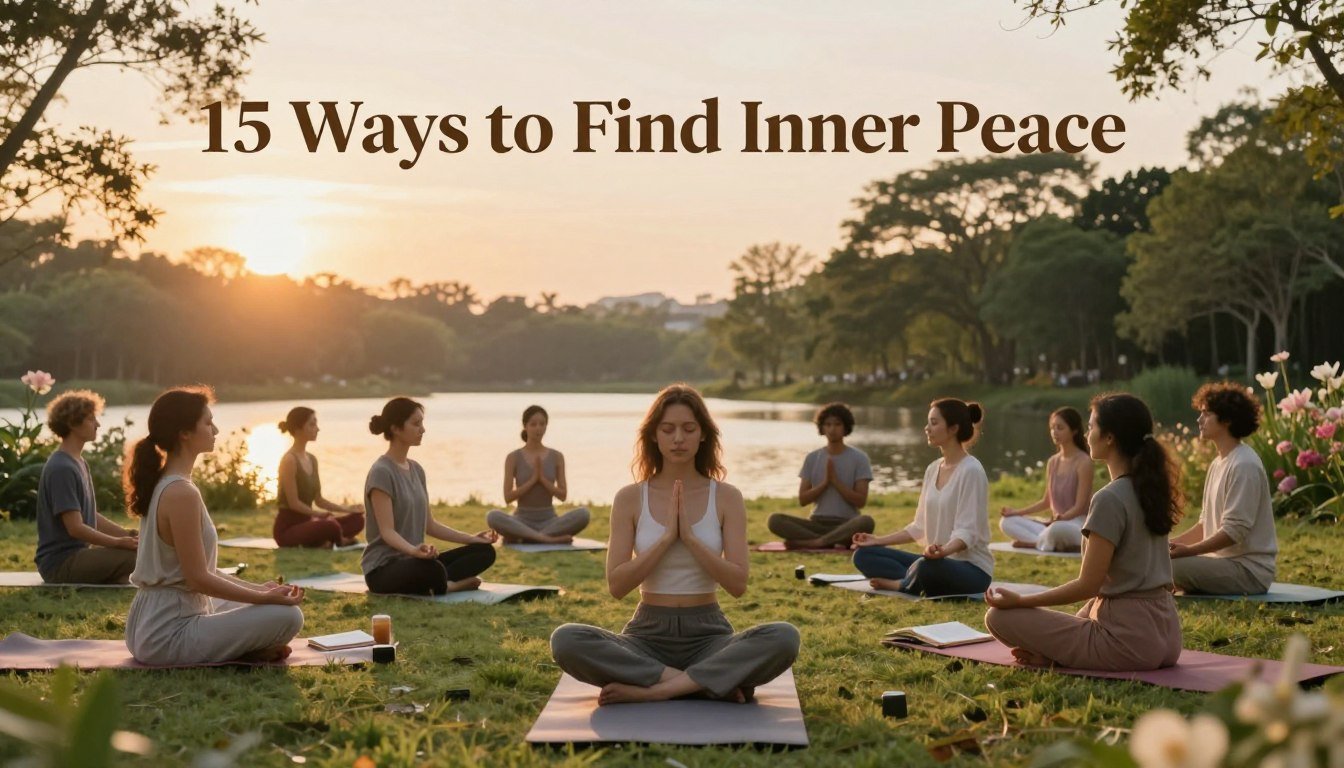
15 Ways to Find Inner Peace for a Calmer Mind Today
In our fast-paced world, feeling overwhelmed has become a common experience for many people. You might feel like you are constantly racing against the clock, leaving little room for true relaxation. Discovering 15 ways to find inner peace can help you reclaim your focus and lower your daily stress levels.
Learning how to achieve inner peace is not a destination but a continuous journey. It requires consistent effort and a commitment to self-awareness. By making small, intentional changes to your daily routine, you can foster a sense of calm that lasts.
These simple habits allow you to build long-term emotional stability. Embracing these steps will help you navigate life’s challenges with a clearer and more balanced perspective.
Key Takeaways
Inner tranquility is a journey that requires daily practice.
Small routine changes significantly lower your stress levels.
Self-awareness is the foundation for a balanced life.
Consistency helps you maintain emotional stability over time.
Practical steps lead to improved mental well-being.
Practical 15 Ways to Find Inner Peace
Finding peace within yourself is a journey that begins with small, manageable steps taken every single day. By focusing on consistent behavioral adjustments, you can create a sanctuary of calm regardless of external circumstances. Here are the 15 Ways to Find Inner Peace that you can start implementing right now to reclaim focus and lower daily stress levels.
1. Embrace Daily Mindfulness Practices for Lasting Calm
Mindfulness practices involve staying fully engaged with your current experience without judgment. You can start by simply observing your thoughts as they pass, like clouds in the sky. This habit helps ground your mind during chaotic moments and forms one of the foundational 15 Ways to Find Inner Peace. Over time, regular mindfulness builds emotional resilience and reduces the urge to react impulsively to everyday pressures.
2. Incorporate Meditation for Inner Peace Every Day
Setting aside just ten minutes a day for meditation for inner peace can significantly lower your stress levels. Find a quiet corner, close your eyes, and focus on the rhythm of your breath. Consistency is far more important than the duration of your session. Among the 15 Ways to Find Inner Peace, daily meditation stands out because it rewires the brain toward greater emotional regulation and sustained mental clarity.
3. Prioritize Intentional Self-Care for Inner Peace
True self-care for inner peace is not just about luxury; it is about meeting your basic physical and emotional needs. Whether it is taking a warm bath, reading a book, or simply resting without guilt, ensure you carve out time for yourself. You cannot pour from an empty cup. Making self-care non-negotiable is a powerful part of the 15 Ways to Find Inner Peace and prevents burnout before it starts.
4. Establish Healthy Boundaries to Protect Your Energy
Learning to say no is one of the most effective inner peace tips available. Protect your energy by limiting commitments that drain your spirit. Setting clear boundaries allows you to focus on what truly matters to your well-being. This practice ranks high among the 15 Ways to Find Inner Peace because it creates the space needed for the other habits to flourish.
5. Practice Gratitude Journaling to Shift Your Perspective
Writing down three things you are grateful for each evening shifts your focus toward positivity. This simple exercise trains your brain to scan for good experiences throughout the day. It is a powerful tool for maintaining a balanced perspective and is one of the easiest of the 15 Ways to Find Inner Peace to begin tonight.
6. Engage in Gentle Physical Movement Daily
Movement releases endorphins that naturally boost your mood and reduce tension. You do not need an intense workout; a gentle walk or light stretching works wonders. Keep your body active to keep your mind clear. Physical activity supports several of the 15 Ways to Find Inner Peace by connecting body and mind in a calming rhythm.
7. Limit Digital Consumption and Reduce Mental Clutter
Constant notifications and social media scrolling often lead to unnecessary mental clutter. Try setting specific times to check your devices rather than staying connected all day. Disconnecting helps you reconnect with your own thoughts. Digital boundaries are a modern essential within the 15 Ways to Find Inner Peace.
8. Cultivate Deep Breathing Techniques for Instant Reset
Deep, intentional breathing acts as a reset button for your nervous system. Try the 4-7-8 technique: inhale for four seconds, hold for seven, and exhale for eight. This practice is accessible anywhere, anytime you feel overwhelmed. Breathing work is one of the most immediate of the 15 Ways to Find Inner Peace.
9. Spend Time in Nature to Lower Stress Hormones
Nature has a unique way of putting our problems into perspective. Spending time outdoors, whether in a park or a forest, helps lower cortisol levels. Let the natural world remind you of the beauty in simplicity. Time in nature is a proven element of the 15 Ways to Find Inner Peace.
10. Practice Forgiveness to Release Emotional Weight
Holding onto grudges is like carrying heavy luggage that serves no purpose. Forgiveness is a gift you give to yourself to release past pain. It frees up emotional space for more positive experiences and is a transformative step in the 15 Ways to Find Inner Peace.
11. Simplify Your Living Space for a Clearer Mind
A cluttered home often leads to a cluttered mind. Take time to organize your environment and remove items that no longer serve a purpose. A clean, minimalist space fosters a sense of tranquility and supports the overall goal of the 15 Ways to Find Inner Peace.
12. Focus on Present Moment Awareness Throughout the Day
Anxiety often stems from worrying about the future or dwelling on the past. Bring your attention back to the “now” by noticing the sounds, smells, and sensations around you. The present moment is the only place where you can truly live. This awareness is central to the 15 Ways to Find Inner Peace.
13. Engage in Creative Hobbies That Nourish the Soul
Creative expression allows you to process emotions in a healthy, productive way. Whether you enjoy painting, writing, or gardening, find an outlet that brings you joy. Creativity is a wonderful path to self-discovery and one of the more joyful 15 Ways to Find Inner Peace.
14. Foster Meaningful Connections with Supportive People
Surround yourself with people who uplift and support your growth. Quality relationships provide a safety net during difficult times. Invest your time in conversations that nourish your soul. Strong connections amplify the benefits of the other 15 Ways to Find Inner Peace.
Foster Meaningful Connections with Supportive People
15. Prioritize Quality Sleep as the Foundation of Calm
Sleep is the foundation of emotional regulation and mental clarity. Establish a calming bedtime routine to ensure you get enough rest each night. When you are well-rested, you are much better equipped to handle life’s challenges. Quality sleep ties together all of the 15 Ways to Find Inner Peace.By integrating these improved habits, you will discover effective methods for finding peace within yourself. Remember that progress is rarely linear, so be patient with your growth as you apply the 15 Ways to Find Inner Peace consistently.
Prioritize Quality Sleep as the Foundation of Calm
Strategies for Sustaining Long-Term Calm
Finding peace within is not a destination but a continuous process of nurturing your inner landscape. While quick relaxation techniques offer immediate relief, true serenity is built upon the foundation of consistent actions and a resilient perspective on life. By shifting your focus toward long-term habits, you create a stable environment where your mind can thrive regardless of external chaos.
Building Consistent Habits
The secret to lasting tranquility lies in the small, daily choices you make. When you prioritize emotional regulation as a non-negotiable part of your routine, you strengthen your ability to remain centered. These inner peace tips work best when they are woven into the fabric of your morning or evening schedule.
Consistency transforms sporadic efforts into a reliable lifestyle. Whether it is a short morning reflection or a nightly gratitude practice, these habits act as an anchor during turbulent times. By showing up for yourself every day, you reinforce the belief that your mental well-being is a top priority.
Managing Stress Triggers Effectively
Preventing burnout requires a proactive approach to the stressors that often disrupt our flow. Identifying your specific triggers is the first step toward promoting inner calmness in high-pressure situations. Once you recognize what drains your energy, you can implement boundaries that protect your peace.
Consider keeping a log of moments when you feel overwhelmed. By analyzing these patterns, you can develop strategic responses rather than reacting impulsively. This level of self-awareness is essential for maintaining your progress and ensuring that your hard-earned stability remains intact.
Developing a Resilient Mindset
Life will inevitably present challenges that test your resolve. A resilient mindset does not mean you never feel stress; instead, it means you possess the tools to navigate difficulties without losing your sense of center. Embracing a growth-oriented perspective allows you to view obstacles as opportunities for learning rather than threats to your happiness.
Cultivating this mental strength is one of the most effective inner peace tips you can adopt. When you accept that change is a natural part of life, you stop fighting the current and start flowing with it. This shift in perspective is key to finding peace within, allowing you to remain steady even when the world around you feels unpredictable.
Conclusion
True tranquility emerges when you commit to small, daily shifts in your routine. Learning how to achieve inner peace requires patience and a willingness to embrace the present moment without judgment.
You hold the power to transform your mental landscape by choosing habits that support your wellbeing. Focus on promoting inner calmness as a core pillar of your lifestyle. This shift creates a ripple effect that touches every part of your day.
Begin your journey by selecting just one or two practices that resonate with your current needs. Small actions lead to significant changes over time. You deserve a life defined by clarity and emotional balance.
Share your favorite techniques with friends or family members to build a supportive community. Your commitment to personal growth inspires those around you to seek their own path toward a quieter mind. Start your transformation today and enjoy the lasting benefits of a peaceful spirit.
If finding inner peace feels harder some days than others, it often comes down to how regulated your nervous system is in the moment — our guide on nervous system regulation breaks down practical techniques that pair well with the ideas here. And if journaling or writing is one of your paths to calm, having a private space for it helps — we use Hostinger for hosting sites like this one, and it’s an easy, affordable option if you ever want to set one up. This post contains an affiliate link. If you purchase through it, we may earn a small commission at no extra cost to you.
FAQ
What are the most effective 15 ways to find inner peace in today’s busy world?
Achieving a tranquil mind involves a blend of mental, physical, and environmental shifts. Some of the most effective 15 ways to find inner peace include practicing gratitude journaling in a Moleskine notebook, setting healthy boundaries with work, and simplifying your home decor to reduce visual clutter. By combining these inner peace tips—such as prioritizing sleep and limiting digital noise—you can create a lifestyle that naturally fosters a sense of quiet and balance.
How can I start using meditation for inner peace if I have a restless mind?
If you find it hard to sit still, meditation for inner peace can be made easier through guided sessions on apps like Headspace or Calm. These platforms offer specific programs designed for beginners that focus on breathwork and observational skills. Remember, the goal of finding peace within through meditation isn’t to empty your mind, but to change your relationship with your thoughts, allowing them to pass like clouds on a Peloton scenic ride.
What are some simple mindfulness practices I can do at work?
You can integrate mindfulness practices into your professional routine by practicing “single-tasking” or taking a three-minute breathing break between meetings. Using a Fitbit or Apple Watch to set hourly “mindfulness reminders” can help you stay grounded. These small actions are essential for promoting inner calmness, as they prevent stress from accumulating throughout your eight-hour shift.
Can you offer advice on how to achieve inner peace through better self-care?
Learning how to achieve inner peace requires viewing self-care as a non-negotiable health requirement. Effective self-care for inner peace might include a digital detox every Sunday, using Aveda essential oils for aromatherapy, or taking a long walk in a local park. When you prioritize your well-being, you reinforce the belief that you are worthy of tranquility, which is a foundational step in finding peace within yourself.
Why is spending time in nature considered one of the best inner peace tips?
Nature is a powerful tool for promoting inner calmness because it naturally lowers heart rates and reduces cortisol. Whether you are hiking a trail in a Patagonia fleece or simply sitting in your backyard, the “biophilia effect” helps synchronize your internal rhythm with the natural world. This connection is one of the most accessible 15 ways to find inner peace, providing a mental reset that no screen can replicate.
How does simplifying my living space help in finding peace within?
Your external environment often reflects your internal state. By following inner peace tips like the KonMari method to declutter your home, you remove the “visual noise” that contributes to mental fatigue. A simplified space allows your brain to relax and focus on the present, making it much easier to sustain mindfulness practices and enjoy a more harmonious daily life.