12 Best Productivity Hacks to Get More Done Without Working Longer
Ever feel like your to-do list grows faster than you can check things off? You’re not alone. Many professionals, students, and entrepreneurs in the USA struggle to balance work, personal responsibilities, and constant digital distractions.
The good news is that productivity isn’t about working longer hours—it’s about using your time more intentionally. Small changes in how you plan, prioritize, and manage distractions can have a surprisingly big impact on what you accomplish each day.
In this guide, you’ll discover 12 of the best productivity hacks that are practical, easy to implement, and backed by proven strategies. Whether you’re working from home, in an office, or managing a busy household, these techniques can help you stay focused, reduce stress, and make better use of your time.
Why Productivity Matters More Than Ever
Modern technology has made it easier to communicate and collaborate, but it has also created endless opportunities for distraction. Emails, instant messages, social media notifications, and back-to-back meetings can interrupt deep work and reduce efficiency.
Improving productivity isn’t about filling every minute with work. Instead, it’s about spending your energy on tasks that create the greatest value while leaving room for rest, creativity, and personal time.
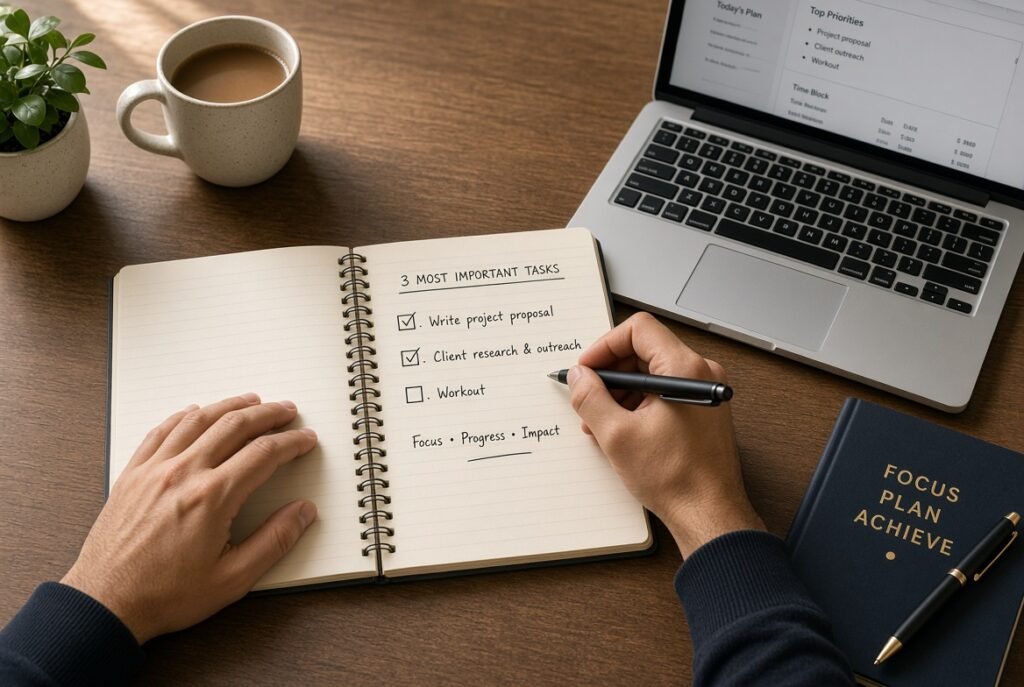
1. Start Every Day with Your Three Most Important Tasks
Featured Snippet Answer
The easiest way to improve productivity is to identify your three most important tasks before your day begins. Completing these priorities first ensures meaningful progress even if unexpected interruptions occur later.
Instead of writing a massive to-do list, choose just three high-impact tasks that will move your work or personal goals forward.
For example:
- Finish an important client proposal.
- Complete a project presentation.
- Schedule medical appointments you’ve been postponing.
Once these priorities are complete, everything else becomes a bonus rather than a source of stress.
Why It Works
A shorter priority list reduces decision fatigue and keeps your attention focused on meaningful work instead of busywork.
2. Use Time Blocking Instead of Multitasking
For example:
| Time | Activity |
|---|---|
| 8:00–9:30 AM | Deep work |
| 9:30–10:00 AM | Emails |
| 10:00–11:30 AM | Meetings |
| 1:00–3:00 PM | Project work |
| 3:00–3:30 PM | Administrative tasks |
During each block, focus only on the assigned activity. Resist the urge to check email or social media until the scheduled time.
Pro Tip
Protect your most productive hours for work that requires concentration. For many people, this is early morning before distractions begin.
3. Apply the 80/20 Rule
Instead of asking, “What should I do next?” ask:
Which task will create the biggest impact today?
For example:
- One strategic meeting may generate more business than responding to dozens of emails.
- Updating your website may attract more customers than spending hours tweaking minor design details.
- Studying the most important concepts can improve exam performance more than rereading every chapter.
Identifying your highest-value activities helps you avoid spending too much time on tasks that feel productive but deliver little real progress.
Common Mistake to Avoid
Being busy isn’t the same as being productive. Before starting any task, consider whether it contributes directly to your goals or simply keeps you occupied.
Absolutely! Here’s Part 2 of your SEO-optimized article.
4. Work in Focused Sprints with the Pomodoro Technique
One of the simplest ways to improve concentration is to work in short, uninterrupted bursts. The Pomodoro Technique encourages you to focus on one task for 25 minutes, followed by a 5-minute break. After completing four sessions, take a longer break of 15–30 minutes.
Featured Snippet Answer
The Pomodoro Technique improves productivity by breaking work into 25-minute focus sessions separated by short breaks. This approach helps reduce mental fatigue, improve concentration, and make large projects feel more manageable.
Why It Works
Knowing you only need to stay focused for a short period makes it easier to get started, especially on tasks you’ve been avoiding. Frequent breaks also help prevent burnout and keep your energy levels steady throughout the day.
How to Get Started
- Choose one task.
- Set a timer for 25 minutes.
- Work without interruptions until the timer rings.
- Take a 5-minute break.
- Repeat the cycle.
If you’re tackling highly creative or technical work, you can experiment with longer focus periods, such as 45 or 50 minutes, followed by a 10-minute break.
5. Eliminate Digital Distractions Before They Disrupt You
Notifications are one of the biggest productivity killers. Every email alert, text message, or social media notification interrupts your train of thought, and it can take several minutes to fully regain focus.
Rather than relying on willpower alone, design your environment to reduce distractions before they happen.
Practical Ways to Stay Focused
- Turn off non-essential notifications.
- Put your phone on Do Not Disturb during deep work.
- Close browser tabs you don’t need.
- Keep only one project open at a time.
- Use website blockers if you tend to check social media frequently.
Real-World Example
Imagine you’re writing an important report. Each time you stop to answer a message or check the news, your brain must refocus on the report. Over the course of a day, these small interruptions can add up to hours of lost productivity.
Creating distraction-free work periods helps you complete tasks faster while producing higher-quality work.
Pro Tip
Schedule specific times to check emails instead of responding whenever a new message arrives. Many professionals find that checking email two or three times a day is enough to stay responsive without constantly interrupting their workflow.
6. Batch Similar Tasks Together
Task switching wastes valuable mental energy. Instead of jumping between unrelated activities, group similar tasks together and complete them in one dedicated session.
This strategy, known as task batching, minimizes context switching and helps you work more efficiently.
Examples of Task Batching
- Respond to all emails at once.
- Schedule social media posts for the week in one sitting.
- Make all your phone calls back-to-back.
- Process invoices during one financial block.
- Plan meals or grocery shopping for the entire week.
Why It Works
When your brain stays in the same “mode,” you spend less time adjusting to different types of work. This often leads to faster completion times and fewer mistakes.
For example, instead of replying to emails throughout the day, reserve a 30-minute block in the morning and another in the afternoon. This simple adjustment can free up several hours each week for more meaningful work.
7. Learn to Say “No” to Low-Priority Commitments
One of the most overlooked productivity hacks has nothing to do with apps, planners, or time management. It’s learning to protect your time.
Every time you say “yes” to something that isn’t important, you’re often saying “no” to something that is.
Featured Snippet Answer
Saying “no” to low-priority requests protects your time and allows you to focus on high-value work. Setting clear boundaries improves productivity and reduces unnecessary stress.
Signs You’re Overcommitted
- You constantly feel rushed.
- Deadlines sneak up on you.
- Your calendar is filled with meetings that don’t require your input.
- You rarely have uninterrupted time to focus.
- You end each day feeling busy but not accomplished.
Polite Ways to Decline
You don’t need to be confrontational. Simple, respectful responses often work best.
For example:
- “I’d love to help, but my schedule is full this week.”
- “I’m focusing on existing priorities right now.”
- “Can we revisit this next month?”
Setting healthy boundaries allows you to dedicate your best energy to the projects and responsibilities that truly matter.
Common Objection
Many people worry that saying “no” will damage relationships. In reality, consistently delivering high-quality work on your commitments builds more trust than overcommitting and missing deadlines.
Here’s Part 3 of your SEO-optimized article.
8. Follow the Two-Minute Rule to Beat Procrastination
Procrastination often starts with small tasks that seem insignificant but gradually pile up. The Two-Minute Rule, popularized by productivity expert David Allen, offers a simple solution: if a task takes less than two minutes to complete, do it immediately.
Featured Snippet Answer
The Two-Minute Rule helps improve productivity by encouraging you to complete quick tasks immediately instead of postponing them. This prevents small jobs from accumulating and reduces mental clutter.
Examples of Two-Minute Tasks
- Replying to a simple email.
- Filing a document.
- Scheduling an appointment.
- Returning a quick phone call.
- Putting away your workspace at the end of the day.
Completing these small actions immediately keeps your task list manageable and frees your mind to focus on larger projects.
When Not to Use It
The Two-Minute Rule works best for genuinely quick tasks. Avoid letting a “two-minute” activity turn into a 20-minute distraction. If a task requires more time or concentration, schedule it for a dedicated work block instead.
9. Design a Workspace That Supports Focus
Your work environment has a significant impact on your ability to concentrate. A cluttered desk, poor lighting, or constant noise can make even simple tasks feel more difficult.
Creating a workspace that encourages focus doesn’t require an expensive office makeover. Small improvements can make a noticeable difference.

Simple Ways to Improve Your Workspace
- Keep only essential items on your desk.
- Use natural lighting whenever possible.
- Invest in a comfortable chair and ergonomic setup.
- Reduce background noise with noise-canceling headphones or quiet music.
- Keep water nearby to stay hydrated.
- Organize cables, notebooks, and supplies to reduce visual distractions.
Real-World Example
If you’re working remotely from home, setting up a dedicated workspace—even in a small corner of a room—can help your brain associate that space with productivity. Over time, simply sitting down at that desk signals that it’s time to focus.
Pro Tip
Spend five minutes at the end of each workday tidying your workspace. Starting the next morning with a clean desk can improve your mindset and reduce unnecessary distractions.
10. Automate and Delegate Repetitive Tasks
Not every task deserves your personal attention. Repetitive activities can often be automated or delegated, freeing up valuable time for work that requires creativity, strategy, or decision-making.
Featured Snippet Answer
Automation improves productivity by reducing repetitive manual work. Delegation allows you to focus on high-value tasks while ensuring routine responsibilities are completed efficiently.
Examples of Tasks You Can Automate
- Calendar reminders.
- Bill payments.
- File backups.
- Email filters.
- Social media scheduling.
- Appointment confirmations.
Examples of Tasks You Can Delegate
- Administrative work.
- Data entry.
- Graphic design.
- Bookkeeping.
- Customer support.
- Routine research.
For business owners and managers in the USA, automation tools can significantly reduce operational workload while improving consistency and reducing human error.
Ask Yourself
Whenever you repeat the same task multiple times each week, consider:
Can this be automated, delegated, or eliminated altogether?
Making this a regular habit can save dozens of hours over the course of a year.
11. Build Consistent Habits Instead of Relying on Motivation
Motivation comes and goes, but habits create long-term results.
Highly productive people don’t wake up feeling inspired every day. Instead, they develop routines that make productive actions automatic.
Why Habits Matter
Every decision you make uses mental energy. By turning important behaviors into habits, you reduce the need to constantly decide what to do next.
Examples include:
- Planning tomorrow’s priorities before leaving work.
- Exercising at the same time each morning.
- Reviewing goals every Monday.
- Reading for 20 minutes before bed.
- Starting deep work immediately after your morning coffee.
Start Small
Trying to change everything at once often leads to frustration. Instead, focus on building one new habit at a time.
For example:
Instead of saying:
“I’m going to become more productive.”
Try:
“Every weekday at 8:30 a.m., I’ll spend 10 minutes planning my day before checking email.”
Specific habits are much easier to maintain than vague intentions.
Common Mistake
Many people quit after missing one day. Remember that consistency matters more than perfection. Missing a habit once isn’t a problem—giving up entirely is.
12. Prioritize Sleep, Exercise, and Recovery
Featured Snippet Answer
Adequate sleep, regular exercise, and scheduled recovery improve productivity by increasing concentration, creativity, decision-making, and energy levels throughout the day.
Why Recovery Matters
Working without breaks eventually leads to mental fatigue, lower-quality work, and burnout.
Healthy habits that support productivity include:
- Getting 7–9 hours of sleep each night.
- Taking short walking breaks during the workday.
- Drinking enough water.
- Eating balanced meals instead of skipping lunch.
- Stretching after long periods of sitting.
- Scheduling downtime with family and friends.
A Sustainable Approach
Think of productivity as a marathon rather than a sprint. Sustainable performance comes from balancing focused work with intentional recovery.
Professionals who consistently protect their health often accomplish more over the long term than those who constantly push themselves without rest.
Key Takeaways So Far
The most effective productivity strategies aren’t complicated—they’re consistent. By applying even a few of these hacks, you can improve your focus, reduce stress, and accomplish more without extending your workday.
The 12 best productivity hacks include:
- Identify your three most important tasks.
- Use time blocking.
- Apply the 80/20 Rule.
- Practice the Pomodoro Technique.
- Eliminate digital distractions.
- Batch similar tasks.
- Learn to say no.
- Follow the Two-Minute Rule.
- Optimize your workspace.
- Automate and delegate repetitive work.
- Build lasting habits.
- Prioritize sleep and recovery.
Here’s the final part (Part 4) of your SEO-optimized article.
Frequently Asked Questions (FAQs)
1. What is the most effective productivity hack?
There isn’t a single productivity hack that works for everyone, but identifying your three most important tasks (MITs) each day is one of the most effective strategies. It helps you focus on high-impact work before distractions and less important tasks take over your schedule.
2. How can I be more productive without working longer hours?
The key is to work smarter, not longer. Prioritize important tasks, eliminate distractions, use time-blocking techniques, and automate repetitive work where possible. Taking regular breaks and maintaining healthy habits also improves focus and efficiency.
3. Does multitasking improve productivity?
No. Research consistently shows that multitasking reduces concentration, increases errors, and slows task completion. Focusing on one task at a time typically produces better results and higher-quality work.
4. Which productivity technique is best for remote workers?
Remote workers often benefit from combining time blocking, the Pomodoro Technique, and a dedicated workspace. Setting clear work hours, minimizing household distractions, and scheduling regular breaks can also improve productivity.
5. How long does it take to build productive habits?
The time varies from person to person and depends on the complexity of the habit. Instead of focusing on a specific number of days, aim for consistent practice. Small, repeatable actions performed regularly are more likely to become lasting habits than dramatic changes made all at once.
Conclusion
Productivity isn’t about filling every minute of your day with work—it’s about making meaningful progress on the things that matter most. By applying these 12 best productivity hacks, you can reduce distractions, improve focus, manage your time more effectively, and accomplish more without sacrificing your well-being.
Remember, lasting productivity comes from building sustainable habits rather than chasing quick fixes. Start with one or two techniques that fit your routine, practice them consistently, and gradually add more strategies as they become second nature.
The goal isn’t to become busier, it’s to become more intentional with your time. If you found these tips helpful, consider exploring related guides on time management, goal setting, or work-life balance to continue improving your personal and professional productivity.
Final Takeaway
Improving productivity doesn’t require a complete lifestyle overhaul. Consistent, intentional actions such as prioritizing your most important tasks, minimizing distractions, and building sustainable habits can transform how you work over time. Focus on progress rather than perfection, and you’ll create a productivity system that supports both your goals and your well-being.
A big part of working smarter, not longer, comes down to protecting your attention from constant digital interruptions — our guide on intentional friction covers practical ways to build that protection into your day without a full digital detox. And if part of your productivity system includes writing things down — task lists, project notes, or a personal planning blog — having a dedicated space for it helps. We use Hostinger for hosting sites like this one; it’s affordable, fast to set up, and worth considering if you ever want your own space to organize and document your workflow.
This post contains an affiliate link. If you purchase through it, we may earn a small commission at no extra cost to you.