Self-Sabotage: Why We Do It & How to Finally Break Free
Have you ever been this close to a major goal — only to unconsciously destroy your own progress? You’re not alone. Self-sabotage affects millions of high-achievers, entrepreneurs, students, and professionals every day.In this comprehensive guide, you’ll learn what self-sabotage really is, the hidden psychological causes, clear warning signs, and 7 actionable strategies to finally break free from self-sabotage — starting today.
What Is Self-Sabotage? (With Real-Life Examples)
Self-sabotage is any behavior, thought, or habit that undermines your long-term goals and well-being — often without you realizing it.Common examples include:
- Procrastinating on important tasks until the last minute
- Perfectionism that prevents you from ever finishing
- Turning down opportunities due to imposter syndrome
- Sabotaging relationships through criticism or withdrawal
- Quitting diets, workouts, or business projects right before results show up
Recognizing these patterns is the first step to stopping self-sabotage for good.
5 Clear Signs You’re Self-Sabotaging
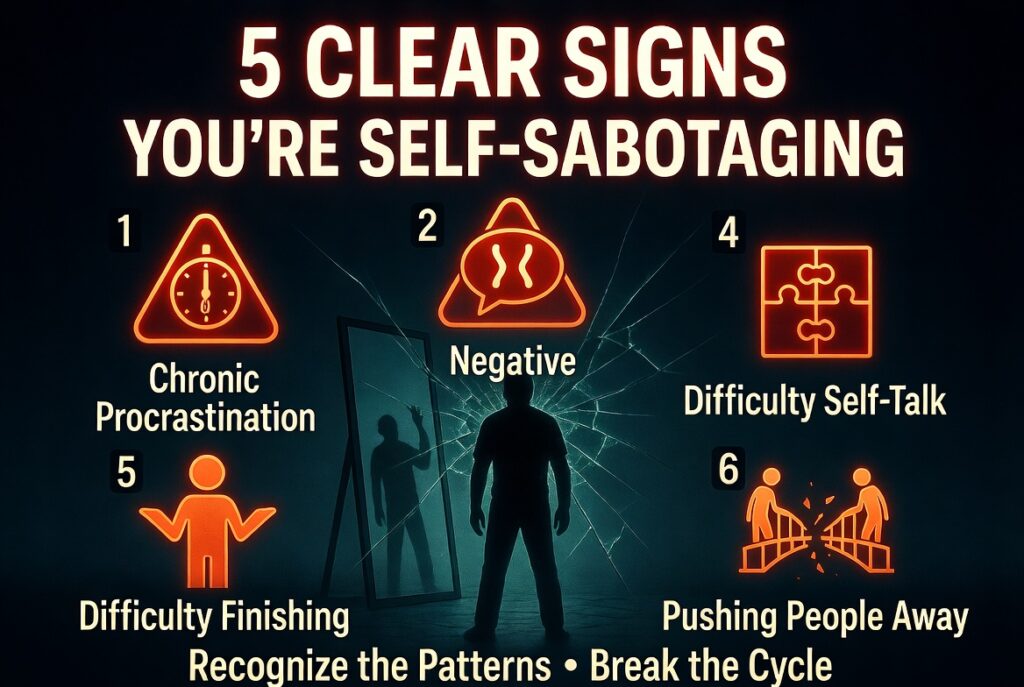
1. Chronic Procrastination
2. Harsh Negative Self-Talk
“I’m not smart enough.”
“I don’t deserve this opportunity.”
“Everyone else is better than me.”This running commentary feels so normal that you barely notice it — but it quietly destroys your motivation and confidence.
3. Difficulty Finishing What You Start
4. Avoiding Responsibility
When things go well, you downplay your role. When challenges arise, you immediately look for external excuses:
- “The market is bad.”
- “My team didn’t support me.”
- “I didn’t have the right tools.”
You create distractions or circumstances that shift blame away from yourself right when success is within reach.
5. Pushing People Away
Why Do We Self-Sabotage? The Psychology Behind It
Understanding the root causes is essential to breaking the cycle.
Main Psychological Reasons:
- Childhood Conditioning — Growing up with criticism or “don’t get too big for your boots” messages
- Low Self-Worth — Unconscious belief that you don’t deserve success
- Fear of Success — Anxiety about increased visibility, responsibility, or expectations
- Need for Control — Preferring to fail on your own terms rather than risk being blindsided
- Cognitive Dissonance — Aligning reality with a negative self-image
A 2020 study in the Journal of Clinical Psychology found that over 70% of adults regularly engage in self-sabotaging behaviors.
The Self-Sabotage Cycle (And How to Break It)
Self-sabotage follows a predictable pattern:
|
Step
|
What Happens
|
|---|---|
|
1. Trigger
|
A goal or opportunity gets close
|
|
2. Fear
|
Anxiety spikes about failure or success
|
|
3. Negative Thought
|
“I can’t do this. I don’t deserve it.”
|
|
4. Destructive Action
|
Procrastinate, quit, argue, or overindulge
|
|
5. Guilt & Shame
|
“I knew I’d mess it up”
|
|
6. Repeat
|
Cycle continues on the next opportunity
|
The key is learning to interrupt the cycle at any stage.
How to Stop Self-Sabotage: 7 Proven Strategies
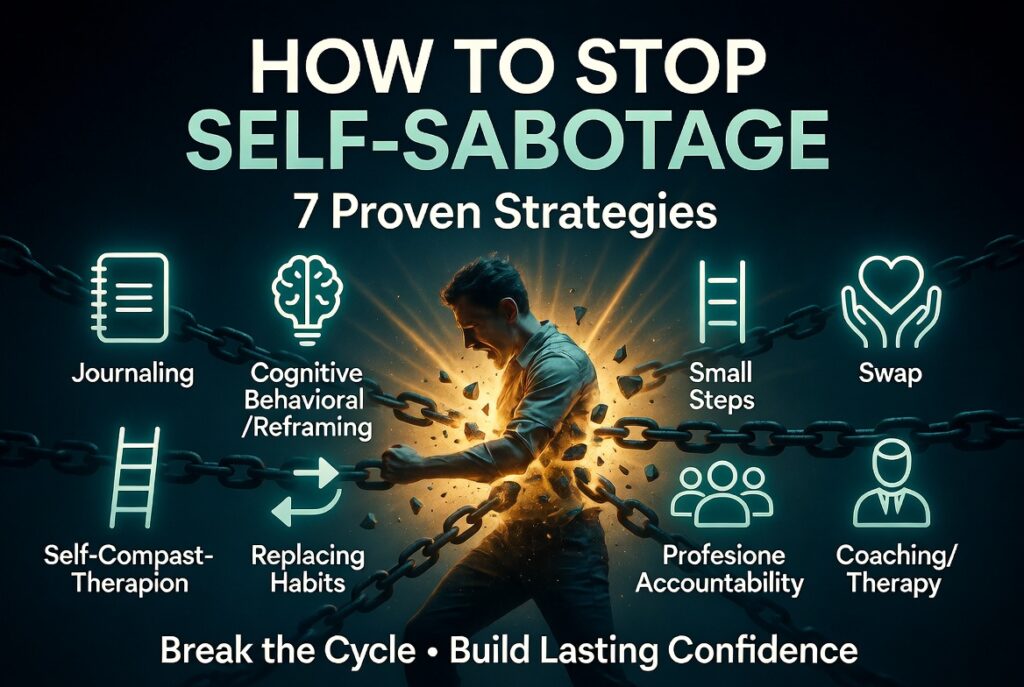
1. Track Your Triggers with Journaling
Commit to keeping a Self-Sabotage Journal for at least 7 days (ideally 21 days for stronger results). Every time you notice yourself procrastinating, quitting, or undermining your progress, immediately write down three things:
- What happened? (Be specific — the situation, the goal, and the action you took)
- How did you feel right before? (Anxious, overwhelmed, unworthy, scared, tired, etc.)
- What thought triggered the behavior? (The exact sentence that ran through your mind)
Example entry:
- What happened: Had 3 hours blocked to work on my business plan but ended up watching YouTube instead.
- How I felt: Tight chest, restless, rising panic.
- Triggering thought: “Even if I finish this, it probably won’t be successful anyway.”
Why it works:
Journaling creates distance between you and the pattern. After just one week, most people report catching self-sabotage in real time instead of realizing it too late. This awareness alone can reduce the behavior by 30–50%.Pro tip: Keep a small notebook or use a notes app on your phone. Review your entries every Sunday to spot recurring triggers.
2. Challenge Limiting Beliefs Using CBT
When you catch a limiting thought, run it through these four powerful questions:
- Is this thought 100% true?
- What evidence contradicts it?
- What would I tell a close friend who believed this?
- What’s a more balanced, helpful thought I can choose instead?
Example:
- Old belief: “I always fail.”
- New balanced thought: “I’ve failed before, but I’ve also succeeded many times. One result doesn’t define my entire future.”
Why it works:
Repeatedly questioning and reframing these beliefs rewires your brain. Over time, the old automatic negative thoughts lose their power.
3. Use Micro-Actions to Beat Overwhelm
How to do it:
|
Big Overwhelming Goal
|
Micro-Action (Do This First)
|
|---|---|
|
Write a book
|
Write one single sentence
|
|
Run a marathon
|
Put on your running shoes
|
|
Start a business
|
Register a domain name
|
|
Improve your health
|
Drink one glass of water
|
|
Build a following
|
Post one short update
|
Small wins release dopamine, rebuild self-trust, and create momentum. Once you start the micro-action, you’ll often continue naturally. This strategy is especially powerful for chronic procrastinators and perfectionists.
4. Practice Self-Compassion
The next time you slip up, place your hand on your heart and gently say:
You can also write yourself a short compassionate note as if you were talking to a dear friend.
Research by Dr. Kristin Neff shows that self-compassion reduces procrastination, anxiety, and self-sabotage far more effectively than self-criticism. It lowers shame and creates a safe internal environment for growth.
5. Replace Destructive Coping Mechanisms
How to do it:
|
Destructive Habit
|
Healthy Replacement
|
|---|---|
|
Doom-scrolling / Avoidance
|
5 minutes of deep breathing or walking
|
|
Drinking or overeating before events
|
Call a supportive friend
|
|
Quitting a project early
|
Send one small update or complete one micro-task
|
|
Pushing people away
|
Say honestly: “I’m feeling scared right now”
|
|
Negative self-talk
|
Read your list of past wins
|
You’re not “lazy” or “broken” — you’re using old coping tools. Replacing them with better ones satisfies the same emotional need without the damage.
6. Build Strong Accountability Systems
-
Your brain can easily lie to you. External accountability makes self-sabotage much harder.Practical ways to create accountability:
- Tell one trusted person your exact goal and deadline
- Make a public commitment (post your goal on social media or in a group)
- Join a mastermind, accountability group, or challenge
- Hire a coach or therapist for professional support
- Use apps like StickK or Habitica that add real consequences
Why it works:
When someone else is watching, the cost of sabotaging becomes higher than the cost of pushing through fear.
7. Consider Professional SupportTherapies proven to help:
-
Sometimes self-sabotage runs so deep that self-help strategies aren’t enough — and that’s okay.Therapies proven to help:
- Cognitive Behavioral Therapy (CBT) — Excellent for changing thoughts and behaviors
- Acceptance and Commitment Therapy (ACT) — Helps you move forward even when difficult emotions are present
- Schema Therapy — Best for deep childhood wounds and long-standing patterns
- EMDR — Highly effective if trauma is involved
Online platforms like BetterHelp, Talkspace, or local licensed therapists can help you make faster progress.When to seek help:
If self-sabotage has been damaging your career, relationships, or mental health for years, professional guidance is one of the smartest investments you can make. Create productive morning routine.
How Long Does It Take to Stop Self-Sabotage?
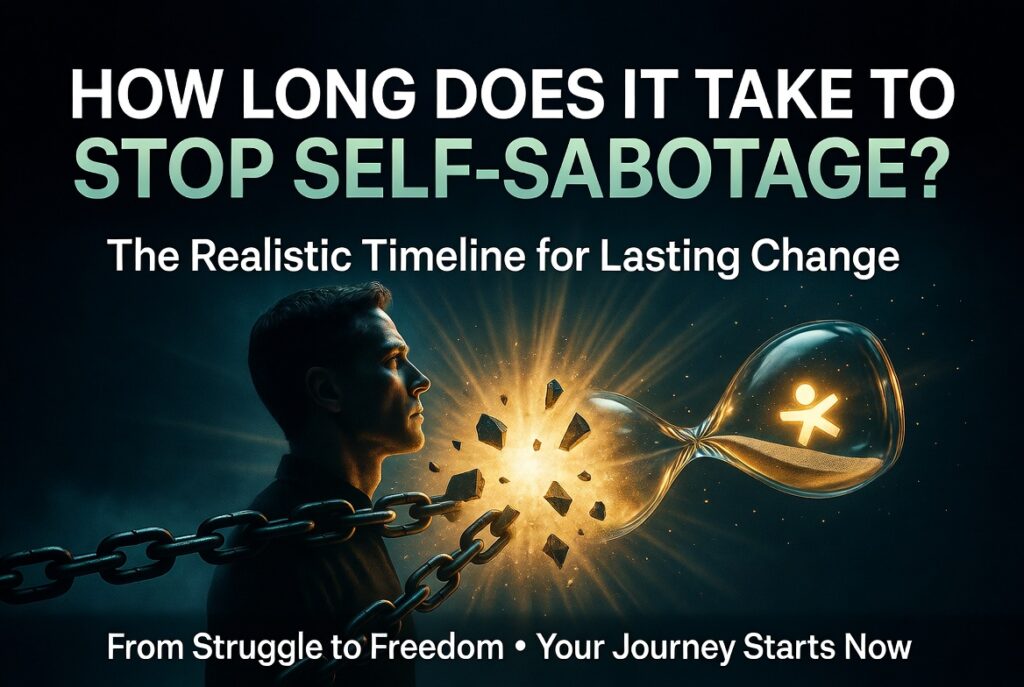
Your Realistic Timeline to Break Free
Weeks 1–2: Building Awareness
- You start noticing self-sabotaging behaviors in the moment rather than after the fact.
- Triggers become more visible. You catch yourself procrastinating, engaging in negative self-talk, or creating excuses.
- Emotional relief begins as you realize “This isn’t random — it’s a pattern.”
Milestone: You go from completely unconscious sabotage to catching it 30–50% of the time.
Months 1–2: Interrupting the Cycle
- You begin successfully interrupting the self-sabotage loop using journaling, CBT reframing, micro-actions, and accountability.
- You complete more tasks and follow through on commitments.
- Relapses still happen, but they feel less automatic and more manageable.
- Self-trust starts to grow as small wins accumulate.
Milestone: You interrupt the cycle in 50–70% of situations. Motivation becomes more stable.
Months 3–6: New Habits Take Root
- Self-sabotaging behaviors become rare instead of default.
- You naturally choose productive actions even when fear or doubt appears.
- A stronger, healthier self-image replaces the old limiting beliefs.
- Relapses, when they occur, are shorter and easier to recover from.
Milestone: Self-sabotage no longer controls your life. You trust yourself to follow through on goals.
Months 6–12: Full Transformation (Maintenance Phase)
- New empowering habits feel automatic.
- You handle setbacks with resilience instead of self-destruction.
- Success feels safe rather than threatening.
- You begin helping others who struggle with the same patterns.
Why Progress Takes Time (And Why That’s Okay)
Factors that influence your timeline:
- How long you’ve been self-sabotaging
- Depth of childhood conditioning or trauma
- Consistency in applying the 7 strategies
- Whether you combine self-work with professional therapy or coaching (this can speed things up significantly)
Pro Tips to Accelerate Your Progres
- Track your wins daily (even tiny ones) to build momentum.
- Be patient with setbacks — they are part of the learning process, not proof of failure.
- Celebrate every interrupted sabotage cycle. Your brain needs positive reinforcement.
- Revisit your self-sabotage journal every 30 days to measure real progress.
- If you’ve been stuck for years, working with a therapist or coach can cut your timeline in half.
Remember:
You didn’t develop self-sabotage in a week, and you won’t eliminate it in a week. But every single day you choose awareness and small action, you are literally rewiring your brain for success.The results are worth it — greater confidence, stronger relationships, higher achievements, and deep inner peace.
Frequently Asked Questions About Self-Sabotage
Is self-sabotage a mental illness?
No. It’s a behavioral pattern, though it can stem from anxiety, depression, ADHD, or trauma.
Can perfectionism be self-sabotage?
Yes. Perfectionism is one of the most common (and socially rewarded) forms of self-sabotage.
Why do I sabotage good relationships?
Often due to fear of abandonment, low self-worth, or repeating childhood attachment patterns.
Can self-sabotage ever be positive?
Rarely. While quitting a toxic situation can be helpful, true self-sabotage is almost always destructive.
Conclusion: You Can Break Free
Self-sabotage is not a character flaw — it’s a learned survival strategy that has outlived its usefulness. With awareness, self-compassion, and consistent small actions, you can rewire your brain and finally achieve the success you deserve.Your next step today:
Choose one micro-action from the table above and do it within the next 10 minutes. Then celebrate the win.
Follow me on X.